
|
Entry: EULOGY Submitted by: Buried at: |
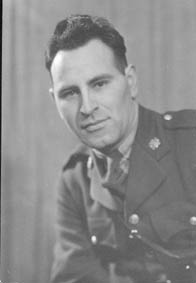 |
|
William (Bill) Joseph Leen 23-03-1905 to 27- 05-1992 On the 6th of July 1990 I sat on the sunny balcony of my brother's beach house on Long Beach Island, New Jersey, with my father. We spent the day together. It was the first time in my adult life that I had spent a day alone with my father. It was the first real conversation I had with him in my adult life. He was eighty seven years old. I was fifty two. It was the last time I saw him. The greatest sadness in my father's life was that all his children had migrated. He and my mother had also become migrants at the ages of seventy one and seventy three respectively. This was following the death of my only sibling who had remained in Ireland. Bill died on 26 May 1992 after a long illness. He was eighty seven years old. He was born in 1905 in Causeway, Co Kerry, Ireland, the sixth of seven children the fourth of five sons. His father, William Jeremiah Leen was a farmer and his mother Ellen, was the first trained teacher in North Kerry in the 1880's. His mother must have influenced him greatly as he had a great love respect for learning and education. He continued to study throughout his own life and made great sacrifices to ensure that his children were all well educated. He instilled a love of learning in all his children. Bill's early education was obtained at the Christian Brothers College in Tralee, Co Kerry. His eldest brother Jerry, had become a priest in America, and he was soon followed there by the next brother,Thomas. Bill resisted pressure by his father to leave school and work on the family farm. He had no liking for farm work and through his own ingenuity managed to finish his schooling. Following the War of Independence and the subsequent Civil War, he joined the fledgling Irish Police where he advanced rapidly through the ranks. His first posting was to Galway, where he met and fell in love with Teresa (Tess) Minogue, and married one year later at the age of twenty one. The following year he was transferred to Bandon, Co Cork. It was here that his first two daughters, Marie and Margarita were born. He was promoted to the rank of Sargeant in 1930, age twenty five, and transferred to Limerick. It was here that his sons, Gearoid and Kevin were born. Another daughter, Marjorie followed in 1934. At age thirty he was promoted to the rank of Inspector, and a welcome return posting to Galway. I joined the family at Salthill, Galway, in 1938. At this time he returned to study. His greatest ambition was to get a University degree. Language and languages were his greatest love. He studied part time at University College Galway (UCG). Bill was a fluent Irish speaker, a rare commodity at his rank level in the young police force. His Irish speaking fluency contributed significantly to his being offered a promotion to the rank of Superintendent, in the Gaeltact of Co Donegal in 1941. Age thirty nine, he was the youngest Superintendent in the Force. Sadly, the university study had to be postponed. It was a hard decision to make. The size of the family left little choice as the position carried an additional Gaeltact allowance, due to being in a remote Irish speaking area. He served in Donegal for ten years. In 1944,
their last child Desmond was born. It was a proud moment for
Bill when eldest daughter Marie, graduated in medicine from UCG.
Kevin also commenced his medical studies at UCG, and later finished
at University College, Dublin. Margarita migrated to London and
joined Barclays Bank. She subsequently migrated to Canada. Gearoid
also migrated to London and then to South Africa and Rhodesia,
where he served with the Rhodesian army. Efforts to gain a transfer to Dublin on Bill's part proved fruitless so he considered other options. In 1959 he applied successfully for the position of Warden at UCD. This challenging new career path at the age of fifty four was in an era where such changes were almost unheard of. Not only did it mean that he could be with Tess in the first home they had owned in their thirty plus years of marriage, but it also brought concessions in education fees for his last son. Desmond graduated in Medicine from UCD in 1965. Additionally, the greatest thrill of Bill's new career was that he could now return to study himself. He received his B.Eco in 1967. Desmond migrated to Canada, working with the Canadian Flying Doctor Service in the North West Territory. This was a more relaxing time in my father's life. At last they had their own home. When Desmond graduated he said to me on one of my rare visits home, "I have been rearing children for forty two years". It was time for them to enjoy themselves. They played golf. Annual European holidays were spent in Germany, Switzerland, France and Italy. He resumed his studies in French ans German and continued to work until the age of seventy. But at this time the greatest tragedy of his life struck him. Marie, his beloved eldest daughter, of whom he was so proud, and the only one of his children remaining in Ireland, died. She was in private practice in Longford, and died at forty eight, leaving three young children. He was broken hearted. A few years later, they sold the house and followed their older children to North America, settling in Toronto near Marjorie. But,he never settled in Toronto. His beloved Ireland called him and illness dogged him for the rest of his life. He is buried in the Toronto Catholic Cemetery. Tess survived him by four years. On that memorable day I spent with Dad two years before his death, he talked mainly about how our migration had been the greatest sorrow of his life. The year after his death, I visited his birthplace for the first time. The beach on the rugged Atlantic Coast still had a traditional currach moored on the beach where he learnt his first swimming strokes. It was the last landfall before America. It's similarities with where we had lived in Donegal were instantly recognisable. To him the years in Donegal had been the happiest of his life. The family were growing up. It was lonely when the older ones were away at boarding school and university for much of the year, but holiday times were wonderful. To me these were also the best years. This was where I knew and loved "my Dad". Petrol was rationed in the war years, and the years immediately following. Mass on Sunday was a one mile walk. He inevitably carried me most of the journey on his shoulders. His petrol allowance for work was limited to court appearances. These were mainly in Dunloe. There was a bakery in Dunloe. We sometimes went with him on these days and he would let us eat the warm bread fresh from the oven. That was when Mom wasn't around. In the sittingroom was a piano and a big bookcase. In spite of early lessons, I never mastered the piano, but the bookcase was my favourite attraction. At night he read to me from "The World Library of Best Books" The Arabian Nights, including Ali Baba and the Forty Thieves, Sinbad the Sailor and Aladdin, - The Curse of Frankenstein, Robinson Crusoe. To relax he read Gustave Flaubert in French, with the aid of a dictionary. He particularly liked Madame Bovary. He read snippets of it to me from time to time, usually to teach me a French phrase. I couldn't wait to get my hands on it when I left home. Unfortunately I read it in English. He improved his German by reading Thomas Mann in German The Magic Mountain, Death in Venice. My Dad was a compassionate man. One stormy winter night, he made more noise than usual when coming home on his bicycle. He called out to Mom from the back door. He had a man on his back. A newcomer to the village, the stranger had a motorbike accident on the Greenhouse Brae corner, crashed into the wall and broke his leg. Dad carried him home on the crossbar of his bike and carried him into the house. He and Mom bandaged his wounds and kept him at home for the night until we got a doctor the next day. Childhood Christmases were extra special. After early mass, my Dad and Mom would team in the kitchen to prepare Xmas dinner. We would all go for a walk on Dad's instruction to "clear the cobwebs out of our lungs and build up an appetite for lunch". They would prepare the turkey and all the trimmings together, including pudding and Mom's special trifle, with real whiskey. It was the only day of the year alcohol was drunk in our house. After lunch Dad had a tot of whiskey and Mom had a glass of Sandeman sherry. We each got a bottle of C & C lemonade. An old Sioux Chief once said; "Be kind to my people because the dead are not powerless". I look at my children and grandchildren, I wake and think in the wee small hours, I see my beloved father in all things. He has never left us. |